
The Moment You Notice It
You hit the button on a 20-degree morning and nothing happens right away. Maybe the opener motor hums but the door doesn't lift. Maybe it tears free with a crack and a shower of ice chips off the bottom seal. Maybe it just moves slower than usual, groaning its way up the track like it's fighting something. After a hard freeze or a nor'easter that dumped snow against the garage, this is one of the most common calls we get in Pelham and the surrounding Westchester towns.
The Symptoms, Side by Side
- Frozen to the floor: the door won't move at all until you break a visible ice seal along the bottom weatherstrip.
- Sluggish travel: the door opens and closes, but noticeably slower than normal, sometimes with a grinding or scraping sound.
- Opener runs but door doesn't lift: you hear the motor working, but the door stays put or only inches up before stalling.
- Reverses immediately: the door starts down, hits something (or seems to), and reverses back up every time.
- Works fine some days, not others: performance tracks closely with the overnight low.
None of these symptoms point to the same fix, which is why the order of diagnosis matters.
What a Technician Checks First: The Ice Seal
The most common and least serious cause is literal ice welding the rubber bottom seal to the concrete slab. Snowmelt runs under the door, refreezes overnight, and glues the weatherstrip down. The fix here is simple: never force the opener repeatedly, since that strains the drive gear and can snap the bottom seal. Instead, break the bond gently with a plastic scraper or warm water, never a metal tool that can gouge the slab or tear the rubber. Longer term, a fresh bottom seal with good flexibility and a slight gap adjustment keeps meltwater from pooling in that spot at all.
Thickened Lubricant and Grit on the Rollers and Tracks
Old grease and road salt residue don't mix well with single-digit temperatures. Lubricant that was fine in September can gum up and resist movement in January, especially on older steel rollers. A technician will check the tracks for dried, dirty lubricant or visible rust, clean them, and apply a lubricant rated for cold weather rather than a generic household oil, which can actually thicken further in the cold.
Spring Tension Shifts
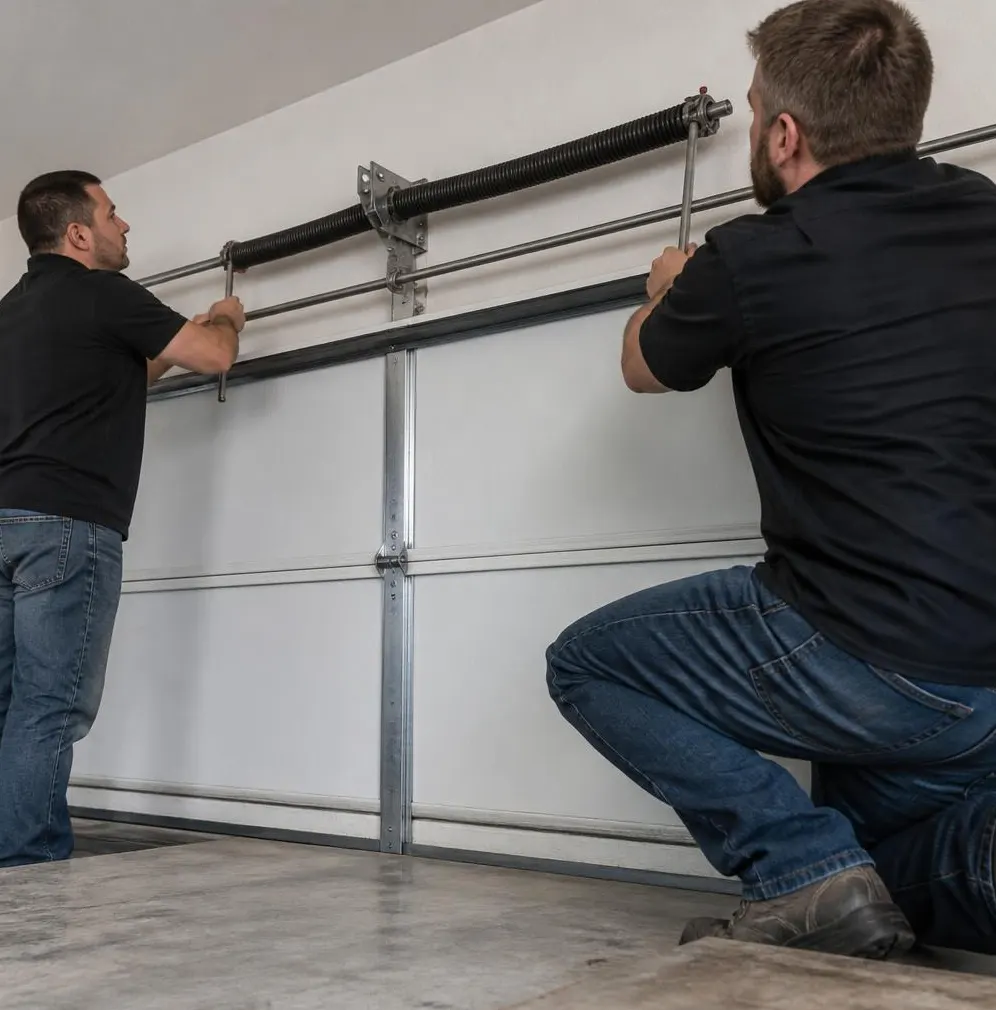
Metal contracts in the cold, and torsion springs are no exception. A spring that's already near the end of its life cycle may lose just enough tension on a frigid morning to make the door feel heavier than usual, causing the opener to strain or stall partway up. This is also the point in the diagnosis where a technician checks for visible gaps in the spring coil or flat spots, since cold is often what finally reveals a spring that was already close to failing. If the spring is worn, replacement is the fix, not just an adjustment, because a weak spring under winter load is a safety risk for anyone standing underneath.
Opener Force and Limit Settings
If the door is heavier than normal because of ice, cold-stiff rollers, or a tired spring, the opener's force sensors may interpret that resistance as an obstruction and reverse the door automatically. This looks like a safety sensor issue but is often just the opener doing exactly what it's supposed to do. A technician re-checks the force settings only after the mechanical issues above are ruled out, since adjusting force to compensate for a bad spring just masks the real problem.
Track Alignment After Freeze-Thaw Movement
Older homes around Pelham and Pelham Manor often sit on slabs that have gone through decades of freeze-thaw cycles. A slab that's heaved or settled slightly can throw a track out of true alignment, which shows up as a door that binds in the same spot every time. This gets checked with a level along the vertical tracks and corrected by loosening and resetting the track brackets.
Sensors and Wiring in Extreme Cold
Last on the list, because it's the least common cause: safety sensor eyes can fog or frost over, and opener backup batteries lose capacity in sustained cold. Wiping the sensor lenses and checking battery voltage rules this out quickly.
Why This Hits Older Pelham Homes Harder
A lot of the housing stock here still has original garage doors and hardware, sometimes with minimal or no insulation. Uninsulated doors transfer outdoor temperature swings directly to the springs, rollers, and seals, which is exactly why these symptoms tend to show up first in older doors during a cold snap rather than in newer, better-sealed installations.
When to Call Pelham Garage Door
If your door is frozen solid, reversing on its own, or straining to lift even after you've cleared visible ice, it's worth having it looked at before the next freeze makes it worse. We handle Spring Repair & Replacement for doors that have gotten noticeably heavier in the cold, and seasonal Garage Door Maintenance to re-lubricate tracks, check tension, and adjust seals before winter really sets in. If you're stuck with a door that won't open at all, our Emergency Garage Door Service covers that too.
If your garage door is fighting you every cold morning, call Pelham Garage Door and we'll get it moving the way it should, all winter long.